
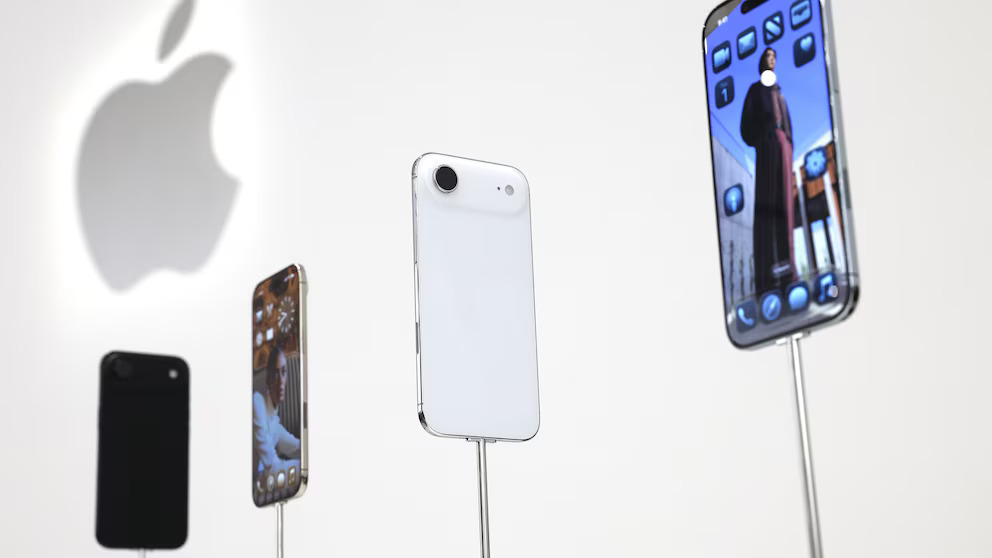

Apple enthusiasts worldwide buzzed with excitement as the company introduced the iPhone Air during its highly anticipated Apple event on September 9, 2025.
This groundbreaking device, part of the Apple iPhone 17 lineup, redefines portability without sacrificing power.
Tim Cook, Apple’s CEO, kicked off the “Awe Dropping” Apple keynote by highlighting how the iPhone Air pushes boundaries in design and functionality.
Meanwhile, industry watchers from MacRumors, Engadget, The Verge, and CNET provided live updates, emphasising their role in the ongoing AI race.
As excitement builds for the iPhone 17 pre-order launch, let’s explore what sets the iPhone Air apart as a revolutionary innovation.
What Sets the iPhone Air Apart from the Apple iPhone Lineup?
Apple strategically markets the iPhone Air as a sophisticated yet approachable choice in the iPhone 17 lineup, seamlessly connecting the base iPhone 17 with premium models like the iPhone 17 Pro Max.
For example, while the iPhone 17 attracts cost-conscious buyers with a starting price of $799, the iPhone Air enhances the experience with its sleek, ultra-thin design.
Additionally, it incorporates advanced features from the Apple iPhone 17 Pro, such as the A19 Pro chip, but at a more approachable iPhone Air price of $999 for the 256GB model. However, unlike the iPhone 17 Pro Max’s colours, which include bold options like orange and silver, the iPhone Air offers a refined palette: Space Black, Cloud White, Light Gold, and Sky Blue. These choices reflect Apple’s commitment to elegance, drawing inspiration from Steve Jobs’ legacy of minimalist innovation.
Moreover, the iPhone Air replaces the bulkier iPhone 16 Pro Max in Apple’s strategy, focusing on lightness at just 165 grams. Users upgrading from older models like the iPhone 15 Pro Max or iPhone 14 Pro Max will notice a dramatic shift, as the device feels almost ethereal in hand. In fact, during the Apple announcement in 2025, Tim Cook demonstrated how this slimness enhances everyday usability, from slipping into pockets to enabling hands-free accessories like cross body straps available at the Apple Store.
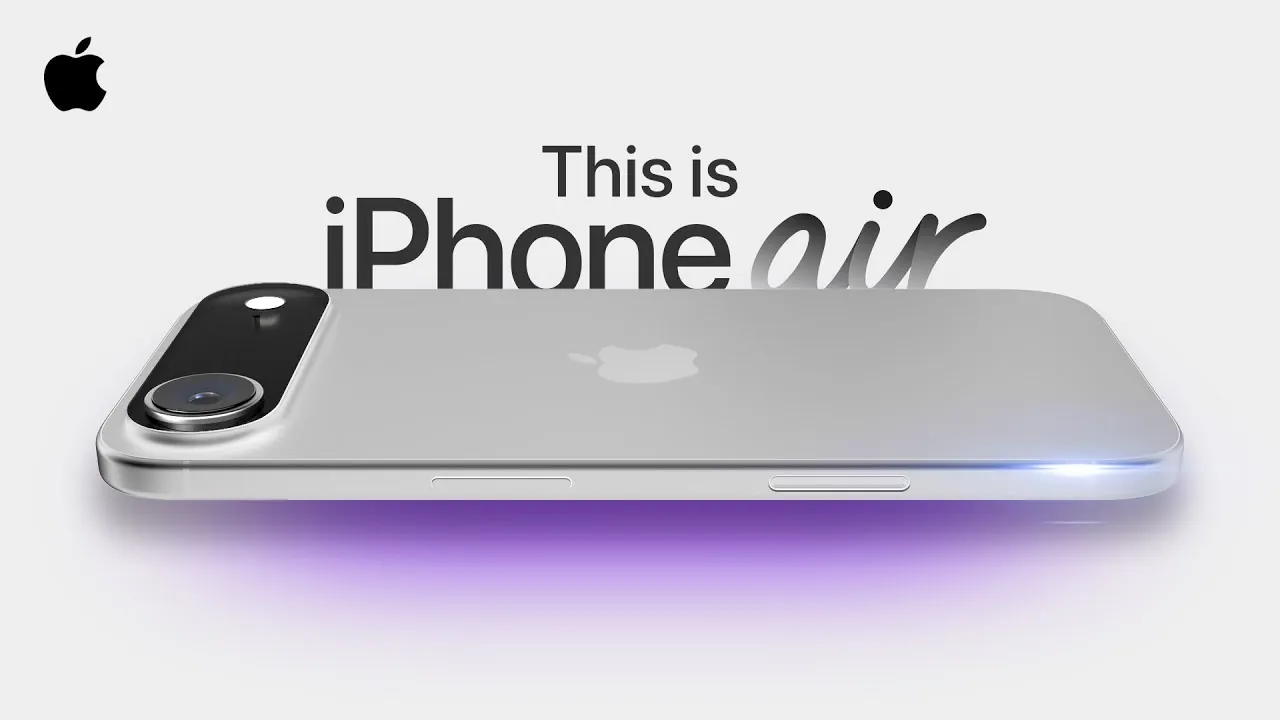
Design and Display: Sleekness Meets Durability
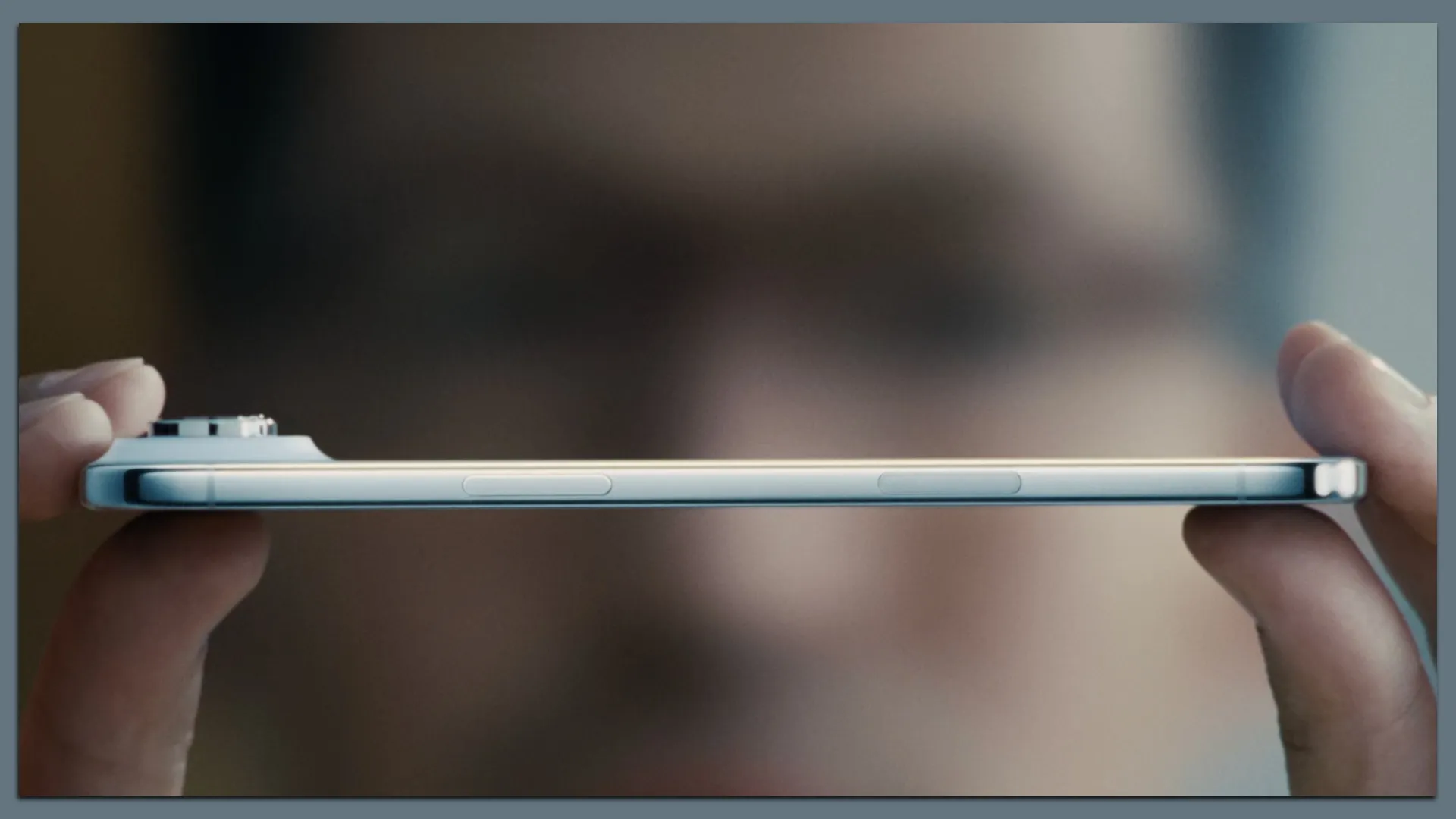
Apple engineers meticulously crafted the iPhone Air with a Grade 5 titanium frame using 80% recycled materials, measuring a mere 5.6 mm thick—the thinnest iPhone ever. This design not only captivates aesthetically but also withstands daily rigours, thanks to Ceramic Shield 2 for superior scratch resistance.
Additionally, the 6.5-inch Super Retina XDR display features ProMotion technology with refresh rates up to 120 Hz, delivering seamless scrolling and stunningly vivid visuals.
Compared to the iPhone 16 Pro, which feels chunkier, the iPhone Air’s bezels slim down further, creating an immersive viewing experience.
However, this thinness doesn’t compromise toughness; Apple claims it’s the most durable smartphone in its lineup.
For those trading in devices like the iPhone 13 or iPhone 11 through Apple’s Trade In programme, the upgrade process is effortless, with enticing promotions from carriers such as Verizon, AT&T, T-Mobile, and Xfinity Mobile for the iPhone 17.
Moreover, the iPhone 17’s colour palette carries over to the Air model, preserving Apple’s unified and stylish design across the lineup.
Performance and AI-Powered Features
At its heart, the iPhone Air is powered by the A19 Pro chip, offering up to 40% enhanced sustained performance compared to earlier models like the iPhone 17 Pro colour options.
This powerhouse enables seamless multitasking and AI-driven tasks through Apple Intelligence, integrated into iOS 26’s “Liquid Glass” design. For example, the neural accelerators handle complex operations effortlessly, making it ideal for creative professionals.
Moreover, the new C1X modem boosts 5G efficiency by 30%, while the N1 chip enhances wireless connectivity with Wi-Fi 7 and Bluetooth 6. Users switching from Samsung devices, such as the Samsung Galaxy S25 Ultra, might appreciate this edge in energy savings.
However, those who prioritise raw speed may find the iPhone 17 Pro Max superior due to its vapour chamber cooling and support for mmWave 5G. Still, the iPhone Air shines in real-world scenarios, like streaming on Apple TV or syncing with new Apple products announced at the event.
Camera Innovations: Capture Moments with Precision
Apple transforms mobile photography with the iPhone Air’s single 48MP Fusion rear camera, which mimics multiple lenses to deliver 2x telephoto capabilities and stunning 4K 60fps video in Action mode.
The 18MP Centre Stage front camera shines for selfies and simultaneous dual-recording, making it ideal for vloggers.
Additionally, the new Camera Control feature allows quick adjustments, enhancing usability over the iPhone 14 Pro or iPhone 13 Pro Max.
The Air’s system prioritises simplicity without skimping on quality, especially when compared to the triple-camera setup in the Apple iPhone 17 Pro Max. This makes it a strong contender against rivals like Samsung, where users often grapple with overcomplicated interfaces. Furthermore, integration with Apple News and live event coverage from sites like The Verge amplifies its appeal for content creators.
iPhone 17 Battery Life and Charging: All-Day Power in a Slim Package
Despite its slender form, the iPhone Air packs a high-density battery around 3,149 mAh, promising all-day usage with up to 27 hours of video playback. Apple achieves this through efficient tech, surpassing the iPhone 15 Pro Max in endurance. Moreover, 35W fast charging reaches 50% in 20 minutes, complemented by MagSafe support.
However, heavy users might opt for the iPhone 17 Pro Max’s larger 5,088mAh cell for extended sessions. Carriers like Verizon and AT&T offer bundles with chargers, while Apple Trade In credits make upgrades affordable from models like the iPhone 17 Pro Max case-compatible predecessors.
iPhone Air Pricing, Availability, and Pre-Order Details
The iPhone Air price starts at $999, with storage options up to 1TB at $1,399. Pre-orders kick off on September 12 via Apple.com or the Apple Store app, with full availability on September 19 in the USA and beyond. For iPhone 17 Pro Max price seekers, it begins at $1,199, while the standard iPhone 17 is $799. Additionally, Apple Event live streams and recaps on YouTube detailed these, with ‘what time is the Apple event’ queries peaking at 10 a.m. PT.
Deals are further enhanced by carrier promotions from T-Mobile and Xfinity Mobile, which frequently include price bundles for the Apple Watch or AirPods Pro 3. The release date of the iPhone 17 Pro Max coincides, guaranteeing simultaneous launches.
iPhone Air vs. Competitors and Older Models
When comparing the iPhone Air to the iPhone 17 Pro, the Air stands out for its portability, while the Pro shines with professional-grade features like USB 3 speeds.
Against the Samsung Galaxy S25 Ultra, Apple’s device offers superior ecosystem integration, though Samsung counters with expandable storage. Furthermore, versus the iPhone 16 Pro Max or iPhone 17 Pro Max colours, the Air feels fresher for light users.
However, for power users, the Apple 17 Pro Max remains king. Insights from MacRumors and Engadget highlight how this lineup evolves from WWDC announcements, with AAPL stock reacting positively to the Apple release.
Related Apple Products and Ecosystem Enhancements
Apple didn’t stop at phones; the event unveiled the new Apple Watch 2025 models, including Series 11 with advanced health tracking, and AirPods Pro 3 priced at $249 for translation features.
Moreover, the latest Apple TV offers effortless integration, with Genlock technology elevating video production capabilities.
For iPhone trade-ins, values reach $700 for recent models, boosting affordability.
Moreover, the Apple live event 2025 recapped integrations like iPhone Mirroring with Mac, solidifying the ecosystem.
Event Highlights and Future Outlook
The Apple event time drew millions to Apple Event live blogs, with Tim Cook’s presentation echoing Steve Jobs’ visionary style. From the Apple announcement today to Apple event updates, coverage on CNET and The Verge praised the innovations. What time is the Apple event today? It started at 10 a.m. PT, lasting about 90 minutes, as per the ‘How long is the Apple event?’ queries.
Additionally, the Apple iPhone 17 unveiling event paved the way for the iPhone 17 release, with iPhone 17 pre-order options launching shortly.
When is Apple event 2025? It’s done, but echoes linger in summaries of Apple events.
In conclusion, the iPhone Air actively transforms Apple’s portfolio, blending style and substance. As users flock to Apple events and explore new Apple phone options, this device promises to captivate.
Whether you’re eyeing the Apple 17 or iPhone Pro, the iPhone Air stands out as a resourceful choice in 2025’s tech landscape. For more, visit Apple.com or follow Apple Live for updates.

