

Ever wondered why your forex charts involving pairs like EUR/USD suddenly spike when Bitcoin news hits the wires?
In the whirlwind of 2025’s markets, Bitcoin doesn’t just dominate crypto headlines. What the flagship cryptocurrency does is, it ripples through traditional pairs like EUR/USD.
As the world’s most traded currency duo, EUR/USD reflects euro strength against the dollar, while Bitcoin acts as a digital wildcard.
Moreover, with Bitcoin trading between $107,241 and $113,357 throughout September 2025 amid exchange-traded fund (ETF) inflows and institutional buys, traders increasingly spot correlations.
This article dives deep into how Bitcoin shapes EUR/USD movements, offering actionable insights for savvy investors. Let’s dive into how Projects Review unpacks this dynamic duo step by step.
Understanding EUR/USD: The Forex Powerhouse
Traders love EUR/USD for its liquidity and responsiveness to global events. Representing a fifth of daily forex volume, this pair fluctuates based on Eurozone economic data, US Federal Reserve policies, and geopolitical tensions.
For instance, a stronger euro pushes EUR/USD higher, signalling confidence in Europe’s economy. However, the dollar’s safe-haven status often reverses this trend during uncertainty.
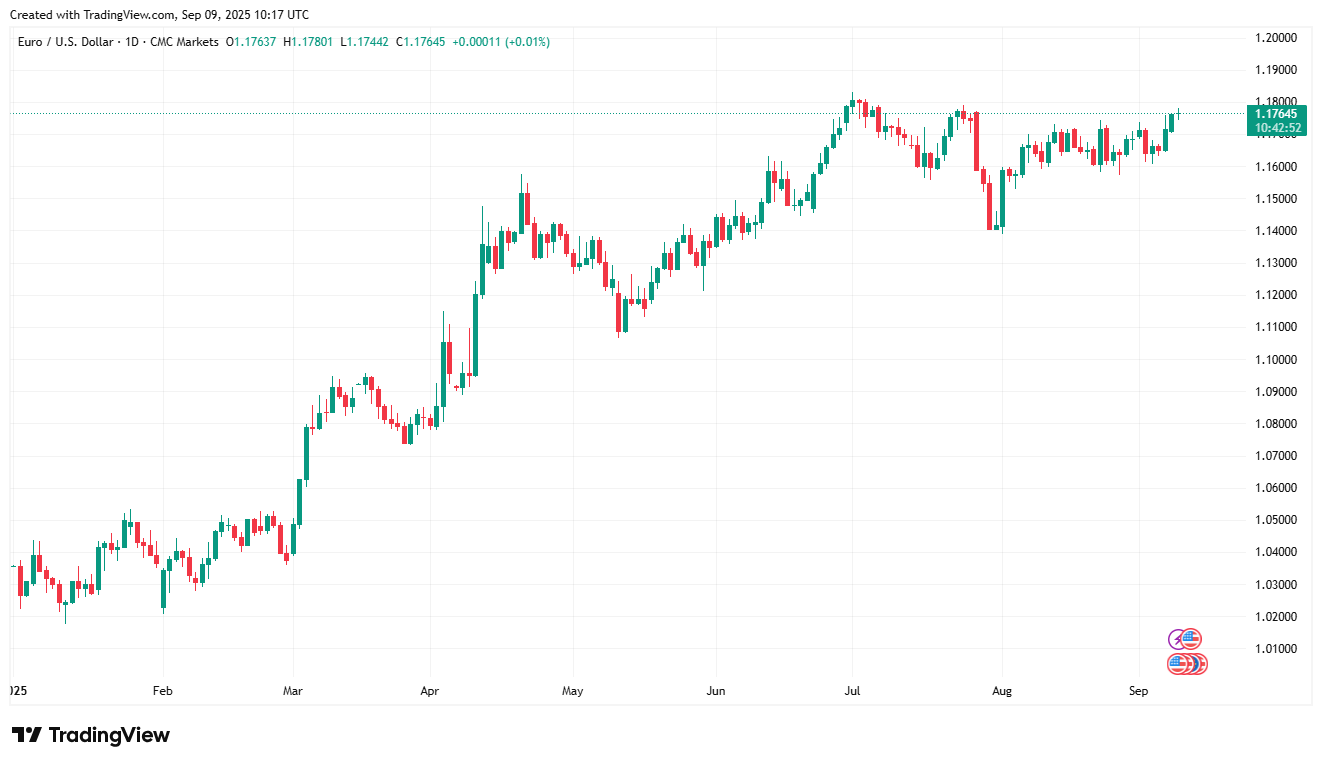
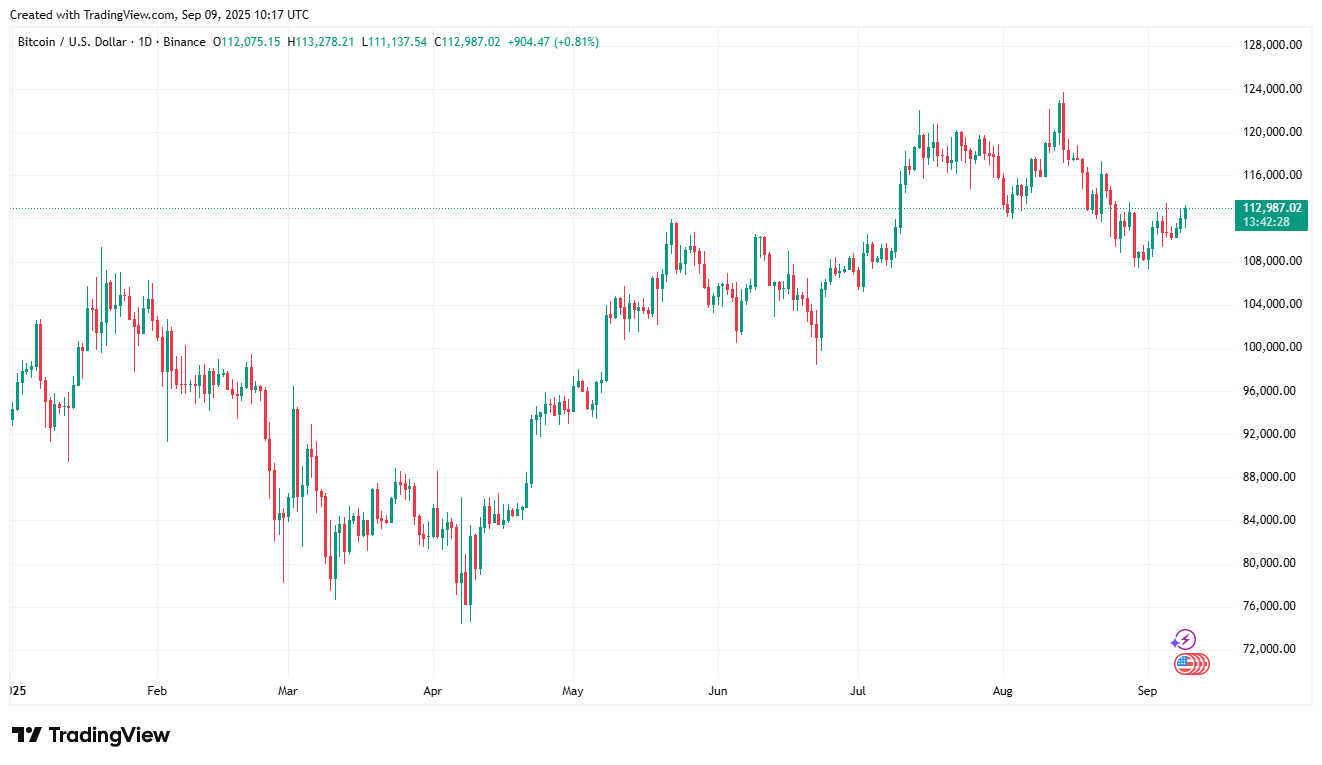
As of this publication, EUR/USD was trading for 1.17, representing a 15% gain year-to-date (YTD) from $1.02 on January 2. Bitcoin’s YTD gains of over 20%—from $93,425 on January 1 to $112,974 as of this publication, are above the gains of the currency pair.
Therefore, grasping EUR/USD basics equips you to spot Bitcoin’s subtle (and not-so-subtle) effects.
Bitcoin’s Role in Global Finance: From Fringe to Force
Bitcoin burst onto the scene as digital gold, a real tradable currency, around 2011. In 2025, the most popular cryptocurrency in the decentralised finance economy (DeFi) commands a $2.3 trillion market cap.
Institutions like MicroStrategy continue to pour billions into BTC. This injection of capital contributed to BTC reaching a new all-time high (ATH) price of $124,457 on August 13, 2025. Bitcoin now mirrors broader risk appetite, much like stocks or commodities.
Furthermore, its decentralised nature challenges fiat currencies, including the euro and dollar. When Bitcoin rallies, it often signals capital fleeing traditional assets, indirectly pressuring EUR/USD.
On the flip side, crypto winters like what happened during the second half of 2022 boosted dollar demand, dragging EUR/USD lower. This interplay fascinates analysts, who note nonlinear relationships between BTC and major currencies.
Direct Ways Bitcoin Influences EUR/USD
Bitcoin directly sways EUR/USD through capital flows and USD dominance. A surging BTC attracts euro-denominated investments, strengthening the euro as European traders buy in.
For example, when the euro appreciates against the dollar, it makes Bitcoin pricier in euros. This potentially curbs demand. That said, history shows the opposite, as a robust euro often correlates with BTC gains as risk appetite grows.
Additionally, Bitcoin’s correlation with the dollar index (DXY) amplifies this. As BTC climbs, it erodes USD hegemony, lifting EUR/USD.
In April 2025, Bitcoin and the euro both challenged the dollar amid a flight from US assets, pushing EUR/USD toward 1.05. However, if EUR/USD hits parity—as some forecasts warn for late 2025—it could temporarily dampen BTC enthusiasm by diverting safe-haven flows to the euro.
Indirect Impacts through Market Sentiment and External Factors
Beyond direct ties, Bitcoin shapes EUR/USD via sentiment waves. As a risk-on asset, BTC booms during bullish equity markets. This bolsters the euro against a softening dollar.
On the other hand, cryptocurrency downturns such as the Q1 2025 crash, which saw BTC plunge 12% from $93,425 on January 1 to $82,548 on March 31, spark market jitters. This bolsters the USD and pushed EUR/USD lower.
For instance, US tariff threats in early 2025 rattled markets, linking Bitcoin’s dip below $77,000 to EUR/USD fragility.
Moreover, macroeconomic crossovers intensify this. Fed rate decisions impact Bitcoin and the most dominant currency pair. Higher US rates strengthen USD, pressuring EUR/USD while cooling BTC speculation.
Yet, ECB dovishness can weaken the euro, creating arbitrage opportunities in crypto. Social buzz on platforms like X (formerly Twitter) highlights this. Several traders are discussing Bitcoin’s role in countering dollar strength, with their posts linking BTC rallies to increases in the EUR/USD exchange rate during VIX spikes at 23 (indicating high volatility).
Therefore, sentiment tools like the COT report (published every Friday) reveal how BTC positioning influences forex flows.

Real-World Examples from 2025: Lessons from the Trenches
Let’s get real with 2025 case studies. In July, EUR/USD could not replicate BTC’s bullish momentum. The currency pair plunged 3% from $1.1791 to $1.1423 during the month. On the other hand, BTC spiked by 8% from $107,144 on July 1 to $115,758 on July 31.
Zoom to September: As Bitcoin aims for new highs fuelled by robust CPI figures, EUR/USD challenges the 1.17 resistance level.
Meanwhile, tariff talks and weak US jobs data could potentially reverse the trend, as demonstrated in February when BTC’s institutional surge boosted EUR/USD despite the fragility of the euro. These episodes show Bitcoin as a sentiment barometer, so watch out for divergences to spot reversals.
Strategies for Traders: Harnessing the Bitcoin-EUR/USD Link
Are you ready to trade these currencies? First and foremost, use correlation tools on platforms like TradingView to track BTC and EUR/USD overlays.
Enter long positions on euro/USD when Bitcoin breaks key supports like its 20-day SMA, signalling a risk-off USD weakness. Additionally, hedge with BTC options during high-volatility events like Federal Reserve meetings.
Risk management is crucial: restrict exposure to 1-2% per trade and ensure diversification across cryptocurrency and forex markets. For day traders, scalps on intraday BTC spikes often predict EUR/USD pips.
What should I consider for the long term? Position for Bitcoin’s cycle shifts, which analysts say will redefine everything in 2025. Always backtest past correlations, like 2022’s crypto winter tanking EUR/USD, to guide future plays.

Wrapping It Up: Why This Matters Now
In summary, Bitcoin profoundly impacts the currency pair by blending crypto volatility with forex fundamentals.
From direct capital shifts to sentiment-driven waves, this relationship evolves daily in 2025’s landscape.
As Bitcoin challenges the dollar alongside the euro, opportunities abound for informed traders.
Stay vigilant, blend technicals with news, and always remember that in these interconnected markets, ignoring Bitcoin could cost you big on EUR/USD.
Could you please share your thoughts on this? Are you optimistic about BTC, EUR/USD, or both?