
Due to the rise of crypto prices buoyed by BTC’s ascent to more than $100,000, millions of people have gone back into holding cryptocurrencies.
Have you, like many crypto enthusiasts and policy watchers, ever wondered what happens when politics and the wild world of digital currencies collide?
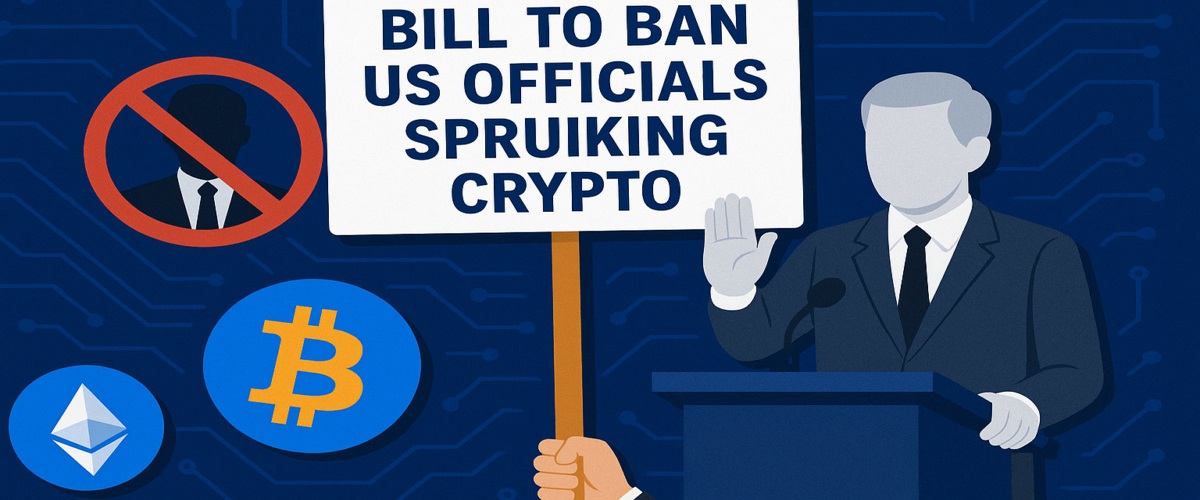
Over the past months, there have been countless proposals by numerous policy markets to ban public officials from engaging with cryptocurrencies.
This has sparked numerous debates across the United States due to the many conflicts of interest involved.
Pennsylvania’s fresh bill is a measure that aims to curb potential abuses.
But are they a necessary safeguard, or is it an overstep of authority trying to deny officials from being a part of the decentralised finance (DeFi) revolution?
In this article, we will explore both sides objectively. Our primary focus will be on regulation, pump-and-dump schemes, market manipulation, and insider trading.
By the end of this article, you’ll have plenty to ponder. Maybe, you may even have some fresh angles to discuss and leave comments for us to also delve into.
Crypto Proposals: What’s on the Table?
Some US policymakers are doing all they can to push for bans on the ownership and usage of cryptocurrencies. Many of them cite conflicts of interest in the booming decentralised finance (DeFi) market, which has surpassed $2 trillion in terms of market capitalisation.
In Pennsylvania, Democratic Rep. Ben Waxman introduced House Bill 1812 on August 21, 2025. The bill prohibits public officials and their families from engaging in crypto transactions tied to personal financial interests.
According to excerpts of the bill, public officials are required to sell off their assets within 90 days. Failing to do so risks penalties of up to $50,000 in fines and a maximum of five years’ imprisonment.
Waxman argues that such action prevents officials from enriching themselves through schemes. He cited federal examples like Trump-linked memecoins, which generated millions of dollars for the First Family.
Nationally, Senator Adam Schiff (D-CA) unveiled the COIN Act in June 2025. The Act targeted presidents, vice presidents, Congress members, and senior executives. This bill bans them from issuing, endorsing, or promoting cryptocurrencies, non-fungible tokens (NFTs), and stablecoins. It also reaches out to family members to help halt what he described as “corruption in plain sight.”
Similarly, Senator Michael Bennet’s STABLE GENIUS Act requires blind trusts and bars politicians from endorsing digital assets.
Other bills, like the Stop TRUMP in Crypto Act and the Digital Asset Market Clarity Act, echo these sentiments by blocking officially issued assets from exchanges.
These initiatives build on the GENIUS Act, signed by President Trump in 2025, which regulates stablecoins but doesn’t directly address official trading.
Over the past three months, the conversation has intensified as many public officials who are themselves crypto enthusiasts look to blend ethics with innovation.
Positives: Integrity and Market Fairness
Proponents actively champion these bans as vital tools to enhance regulation and protect markets. First and foremost, they believe the ban will tackle insider trading head-on. Despite the rigorous regulatory standards, many officials often access privileged information on policies that could sway crypto prices.
A great example of such behaviour can be attributed to shaping policy for the flagship cryptocurrency, Bitcoin. Many senators, who are also BTC holders, could advocate for pro-crypto laws. As a result, they might unfairly profit from the potential rise in Bitcoin’s market value, which could erode public trust in the process.
They hold the notion that having bans in place will ensure that decisions prioritise the public good over personal gain.
Moreover, these measures combat pump-and-dump schemes. Public figures can hype tokens on social media. Due to their natural massive followings on many social media applications as a result of their positions, these tokens can gain significant value within a short period. Adhering to the basic rule of associating with crypto, they can sell their holdings off, leaving millions of other investors bleeding.
The COIN Act directly counters such scenarios by prohibiting promotions. While it may not eradicate all the nuances associated with crypto, it could potentially reduce volatility and shield retail investors from manipulated hype.
In terms of market manipulation, potential bans promote transparency. Pennsylvania’s disclosure mandates could deter shadowy dealings. This promotes fair competition.
Overall, supporters argue these rules align with existing stock trading bans for officials. Many supporters hold the notion that extending protections to crypto’s unregulated frontiers and preventing scandals could deepen market distrust.
Does a crypto ban lead to risks to innovation and personal freedoms?
However, critics fiercely oppose these bans, with some of them warning they stifle innovation and infringe on freedoms. Regulation-wise, an outright prohibition might discourage tech-savvy officials from engaging with crypto. This could lead to poorly informed policies. Imagine lawmakers banning what they don’t understand.
History has shown over decades that overregulation can hinder growth, as seen in early internet rules. Thus, the U.S. risks falling behind other pro-crypto nations that have found better ways to address government officials’ relationships with digital assets.
On pump-and-dump and manipulation, detractors point out that bans don’t address root causes. This is because malicious actors exist everywhere, and existing Securities and Exchange Commission (SEC) rules already target fraud. Who knows, a blanket ban might push trading underground, worsening issues rather than solving them.
For insider trading, critics argue disclosure requirements suffice. Why consider banning ownership of crypto coins and tokens when transparency works for centralised finance (CeFi) assets such as stocks?
Additionally, these proposals could polarise several parties in the investment landscape. Many people may view bans as politically motivated attacks targeting Trump-linked ventures.
More importantly, personal freedoms face certain restrictions. This is because US public officials are humans with a right to choose which assets to invest their hard-earned money in. They deserve to uphold their rights to invest. Extending ownership to them as well as their families is seen as being overly intrusive.
How other countries are handling public officials’ crypto affiliations
Assessing what other countries are doing with this pressing issue adds objectivity to numerous schools of thought. South Korea banned officials from crypto trading in 2018 to avoid influence risks. While it has gone a long way to prevent conflicts of interest and influence, it has drawn innovation critiques.
In 2021, Russia banned public officials from holding cryptocurrencies. A crypto-unfriendly country like China barred the public from the use of digital assets in 2021 as well.
The prohibition is a clear statement by the East that helps curb the influence of digital currencies in the financial lives of their citizens.
In contrast, El Salvador has embraced Bitcoin as legal tender. Unlike other countries where officials cannot dabble with crypto, they can in Nayib Bukele’s country.
The Bottom Line
In conclusion, proposals to prohibit public officials from engaging in crypto trading challenge the fundamental principles of ethics and innovation.
They promise stronger safeguards against manipulation and insider abuses. Despite this, risk overreach could harm the progress of this revolution.
As these bills evolve, crypto traders must tread cautiously by staying updated with regulatory patterns as they engage with DeFi assets.
What do you think? Are potential bans essential reforms or unnecessary barriers to entering the market?