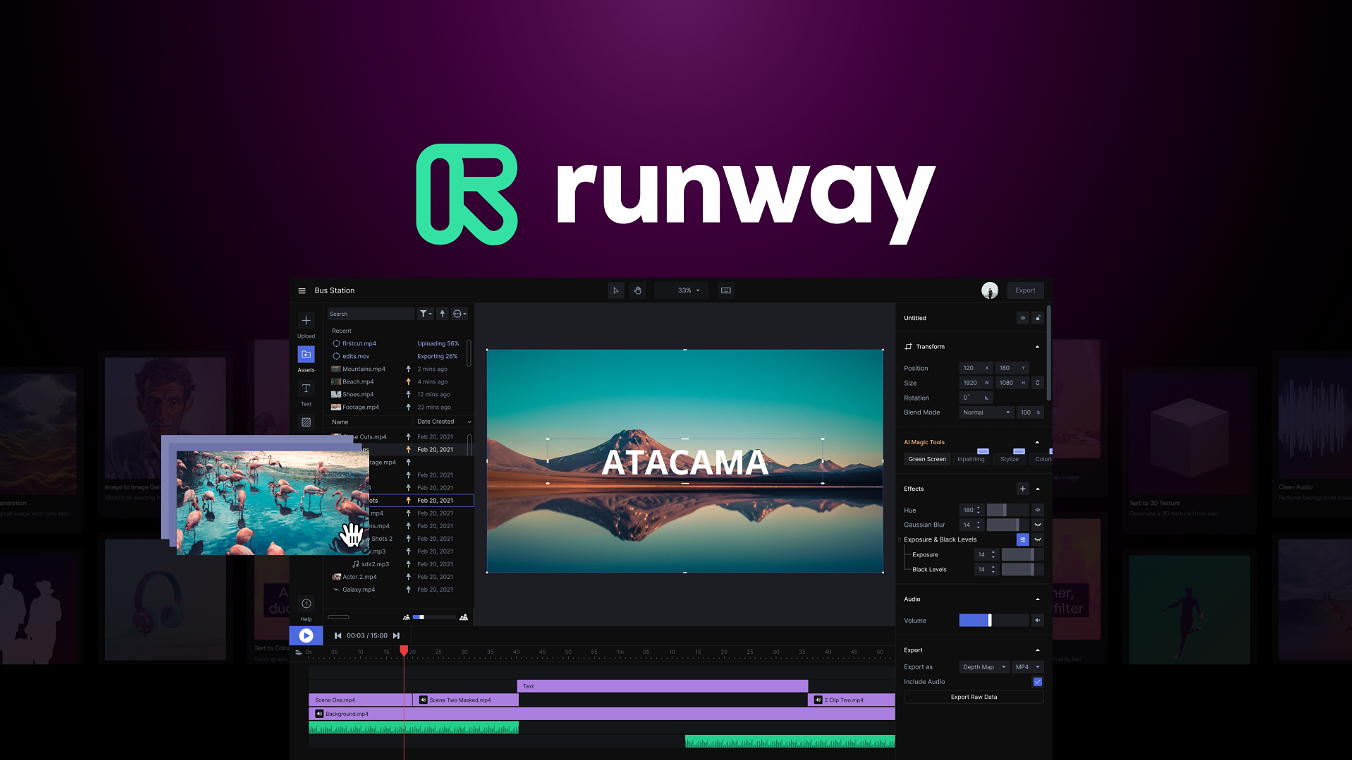

In a rapidly evolving landscape where artificial intelligence (AI) fuels creative innovation, Runway AI stands tall as a powerhouse for video and image editing.
This enables creators to push boundaries without traditional barriers.
Founded in 2018 by Cristóbal Valenzuela, Alejandro Matamala, and Anastasis Germanidis, this New York-based company has grown into a leader in generative AI.
As of August 2025, Runway AI serves the needs and interests of more than 30 million users.
Recently, Runway unveiled Gen-4, a model excelling in narrative-driven video generation. This was launched alongside Aleph, which revolutionises real-time video editing via text prompts.
Additionally, tools like Act Two and References enhance character consistency and performance capture.
This review explores Runway’s transformative capabilities, drawing from user experiences and expert analyses to offer insightful guidance.
The article will also highlight why it captivates filmmakers, designers, and marketers alike.

Runway Core Functionality and Workflow
Runway operates as a cloud-based platform that seamlessly integrates AI into content creation workflows.
Users start by uploading images, videos, or text prompts, then leverage models to generate or edit assets dynamically.
For instance, text-to-video mode crafts scenes from descriptions like “a cyberpunk alley with holographic ads flickering in the rain”, producing clips up to 10 seconds in 4K resolution.
Moreover, image-to-video animation brings static visuals to life. Video-to-video tools allow precise modifications, such as altering backgrounds or adding elements mid-frame.
The process unfolds intuitively. Sign up at runwayml.com, select a tool, input parameters like motion intensity or style references, and generate outputs in minutes.
However, refining prompts requires practice. Incorporating details like “dynamic camera zoom” and “moody blue tones” often yields more polished results than generic inputs.
Innovative Tools: From Gen-4 to Aleph
Runway’s toolkit bursts with features that ignite creativity. Gen-4, launched in March 2025, generates hyper-realistic videos with advanced narrative coherence. The software is ideal for short films and music videos, as it simulates physics and emotions fluidly.
Additionally, Aleph edits existing footage through conversational prompts. With this, it adjusts lighting, camera angles, or even deletes objects. This transforms a mundane clip into a cinematic masterpiece without manual keyframing.
Act Two captures user performances via webcam, lip-syncing voices and morphing appearances into characters, even non-human ones, fostering hybrid AI-human acting.
Furthermore, References ensures character consistency by anchoring generations to uploaded photos or 3D models. This prevents the artefacts from morphing in sequence.
These platforms turbocharge prototyping, empowering creators to rapidly refine ideas. The Runway platform combines AI accuracy with human creativity to produce stunning and innovative visuals.
Runway User Experience and Community Engagement
The platform’s interface captivates with its clean, collaborative design. This supports real-time teamwork via shared projects and integrations with Adobe Premiere or Figma.
Beginners thrive on the mobile app for iOS and Android, where tutorials guide prompt crafting.
Consequently, the Runway Discord community buzzes with thousands sharing workflows, prompts, and feedback. This turns a solitary creation into a collective endeavour.
Users frequently praise its accessibility. Marketers whip up engaging ads, while artists experiment with styles from surrealism to photorealism.
Yet, like all projects within any industry, challenges arise. Complex edits sometimes yield janky textures or slow processing times. The turnaround time normally exceeds five minutes for short clips.
To improve quality, experts recommend using high-resolution sources and trying different versions, since Runway gradually improves the results.
Strengths and Limitations Unveiled
Runway excels in versatility and fidelity, outpacing rivals with tools like automated rotoscoping and 4K editing that slash production times dramatically.
Moreover, its frequent updates—such as Gen-4’s narrative enhancements—address user pain points. This empowers under-represented creators in indie filmmaking or small agencies.
However, limitations persist: a steep learning curve frustrates novices, with inconsistent results in art direction for client projects.
Clips often cap at short durations, and the credit-based system can feel restrictive during heavy use.
Additionally, cloud dependency demands reliable internet, raising privacy concerns for sensitive footage.
Competitive Landscape
Comparatively, Runway dominates in professional workflows against competitors.
Pika prioritises playful, quick generations, but she lacks Runway’s depth in VFX and collaboration.
OpenAI’s Sora crafts stunningly realistic visuals with impeccable physics, but its limited accessibility and lack of Runway’s robust editing tools set it apart.
Fliki offers solid social media tools at lower costs, though Runway’s customisation edges them out for high-quality outputs.
Luma shines in abstract animations, but Runway’s multimodal approach—blending video, audio, and text—makes it a versatile choice for comprehensive projects.
In essence, Runway targets pros seeking robust tools over casual fun.
Practical Applications across Industries
Resourcefully, Runway unlocks myriad use cases. Filmmakers prototype scenes using Gen-4, which saves them weeks in pre-production by generating storyboards and effects such as exploding stars.
Marketers craft viral content, such as animating product demos with Aleph’s text edits. This boosts engagement on platforms like TikTok.
Teachers bring concepts to life, transforming history lessons into captivating, immersive cinematic experiences.
For best results, combine with external tools. Use Midjourney for initial images, then animate in Runway.
Pro tip: Employ “–ar 16:9 –v 5” in prompts for aspect ratios and versions, minimising regenerations and conserving credits.
Game developers experiment with generative adventures, where AI crafts unique narratives.
Runway Pricing Structures and Overall Value
Runway’s pricing plans cater to varied users: the free Basic tier offers 125 monthly credits for experimentation.
The Standard plan ($12/month) boosts you to 625 credits, quicker processing, and premium features like Turbo mode.
Pro ($28/month) offers 2,250 credits with unlimited relaxed generations, and Unlimited ($76/month) eliminates limits for heavy users.
Annual billing brings discounts, making it cost-effective. Value resonates in user feedback—scores hover at 4.5/5 on G2 for productivity gains—but some cancel due to unmet expectations.
If you are looking for offline alternatives, consider HitPaw; however, the depth of Runway’s AI justifies the investment for professionals.
Future Outlook and Ethical Reflections
Looking forward, Runway’s trajectory excites with expansions into longer-form content and voice integration. This could potentially disrupt Hollywood.
However, ethical dilemmas emerge: as realism blurs, creators must label AI outputs to curb misinformation. Therefore, Runway not only amplifies creativity but also urges responsible use.

The Bottom Line
In conclusion, Runway AI redefines content creation by merging cutting-edge technology with intuitive design, transforming ideas into vivid realities.
It empowers users to innovate boldly, proving essential for efficient, insightful workflows.
While imperfections exist, its resources in prompt mastery and community support make it indispensable.
Explore runwayml.com today, experiment relentlessly, and unleash your potential.
Runway isn’t merely a tool; it’s a gateway to the future of imagination.